Monday, October 17, 2011

Does My Insurance Cover Home Care?

Just about every week we receive calls, typically from spouses or adult children of seniors, asking what their insurance covers with respect to their loved one's need for home care or some type of on-going assistance in the home.

The simple answer is that, unless the person needing care has a Long Term Care Insurance policy, there is no coverage at all for in-home caregiver services. Not under Medicare, not under Medicare supplemental, not through your private insurance policy. None.

Long term care facilities and senior living communities are crowded and ubiquitis not because people don't prefer to live out their years in the comfort of their home but because the cost of in home care is among the few medical necessities that is not covered or shared in any way by Medicare or a private insurance plan.

Even those with long term care insurance, which is the only type of policy that covers any type of caregiver and/or in-home services, may not receive the type of benefit and cost coverage that would allow them to stay in their home.

Navigating any insurance policy and its nuances is difficult under even the best of circumstances. Long term care insurance plans are no less confusing to the average consumer. Long term care insurance, like a 401K, is better to invest in sooner in life because the policy's annual cost is based on the insured's age.

The Department of Health and Human Services offers an online resource and guidance dedicated specifically to long term care insurance. I recommend making time to read through this surprisingly user friendly site to familiarize yourself with the basics of long term care policies: http://www.longtermcare.gov/LTC/Main_Site/index.aspx

My guess is that most of you read this blog with your parents and/or loved one's in mind. For seniors, a long term care policy may be found to be prohibitively expensive. Maybe after doing some calculations you will find that paying for care out of pocket makes more sense than purchasing a policy now. 

My advice is that you think forward and consider shifting focus to what your needs may be in 20 years. If you have been forced to learn about caregiver and home care costs by changing circumstance or a medical episode relating to your parents or a loved one try to accept this challenging moment as an opportunity to learn from this experience and better prepare for your own future.

Wednesday, September 21, 2011

Pacifica Medical Private Nursing and Home Care

We receive several calls each week from prospective private home care clients. Most of the calls are made by spouses or adult children of a loved one that has suffered a medical event and can no longer live independently.

For those making the call and arranging service there is a steep learning curve. Mostly the questions are the same: Does insurance cover this? How much does it cost? What is the difference between your company and the others I have called? 

Typically the cost questions run out in front as being the most important. And there are some major disparities between what a company charges on the low end and those on the high end of the scale.

My advice to those that can afford a private caregiver or nurse in the $22/hour price range is to reorder their priorities. Put the client care and peace of mind before price. Know the difference between a caregiver service and those provided by a licensed agency. Recognize that your loved one is likely to need increasingly complex, medically inclined care as time goes on.

Hiring a non-licensed agency means that as a client's condition necessitates more highly-skilled care your agency will not be able to meet those needs and you will have to return to the marketplace and begin your search for home care anew.

Many people have been shocked to find they pay the same amount of money to a company like LivHome as you would for a licensed agency to attend to your loved one. Unfortunately most will only come to realize this after a non-licensed agency is forced to inform them that they are no longer able to care for their loved one when skilled care (as it inevitably does) becomes necessary.

Skilled or medically inclined services are different from typical non-licensed home care agency services in that the only caregivers a licensed agency like Pacifica Medical hires are those that have formal medical training and have received a diploma or certificate from an accredited school.  

Caregivers that have medical training care for the client in their daily activities and provide companionship but also serve the role of advocate, coordinator and guardian to ensure the best medical care is being provided by all, including the client’s doctor. Because they have medical training, nurses and caregivers are proactive in an emergency and able reduce the chances a client will need to be hospitalized or suffer further injury.

Medically trained caregivers are able to recognize when treatment is not effective. A licensed agency like Pacifica Medical can legally provide RN's, LVN's and therapy services such as Physical Therapy in the home, so we are able to meet a client’s needs as they become more complex, and reduce trips to outpatient facilities and MD offices.

Medically trained caregivers are often referred to as a physician’s “eyes and ears”. A major contributing factor of re-hospitalization is the duration between prescribed treatment and medicine and the next MD visit. Our nurses and caregivers are able to assess a client's condition and response to medication and treatment, and speak knowledgeably when reporting client status to an attending physician.

The differences between what we do and the narrow ability of those ubiquitous non-licensed home care agencies you find on the internet cannot be understated. It's not just about value. When you hire Pacifica Medical or any reputable licensed home care agency you should expect the price of care to include smart, well-trained caregivers and nurses, quality of life and peace of mind, respect and professionalism.

Pacifica Medical Private Nursing and Home Care

Friday, August 12, 2011

What To Do With The Kids When Visiting Grandma & Grandad


Following our recent Facebook post about Alzheimer’s risk factors and prevention I want to share an idea born of my own experience when visiting my grandfather -who suffers from severe symptoms of Alzheimer’s and Dementia- with my young boys in tow.

I'm writing this post for those of you that want to bring your young children to visit an elderly loved one but find it difficult to pair their fitful energy with your loved one’s environment and mental state.

My grandfather was probably the most influential person in my life, but Alzheimer’s and Dementia have reduced him to the point that he does not recognize me, nor is he able to comprehend that my three children (a 6 month-old baby girl, and my 3 and 5 year-old boys) are his great grandchildren.

I understand his disease, maybe even better than most because of the type of work I do. I also know that my story is no different from millions of others in that the stress, the heartbreak, and for some, the financial pressure that come with caring for a loved one with Alzheimer’s or Dementia conspire to make this one of the most difficult family matters we encounter.

The tug of sentimentality, the undying desire for my children to know and love my grandfather as I do, and my wish that he would be able to know and love them are ever colliding with the reality that our visits with him are, in spite of my understanding, painful for me and not at all fun for my boys. 

Besides the long drive (we live about two hours south of my grandparents) I have not made a great effort to visit my grandfather because there is, despite my best efforts, very little interaction between my children and my grandfather when we do visit. Going to see great-grandpa is simply a drag for them, and they are too young to understand why it's important to me.

I often think about how we could make our visits with my grandfather more enjoyable for all of us but he's only getting older, with the disease outpacing our visits and his ability to recognize any of us now not even worth hoping for.

I'm sharing this story with you today in hopes that as your parents or grandparents reach an age where Alzheimer’s and Dementia necessitate concern you are better prepared and have more tools at your disposal to make visits with them, kids in tow, a positive experience for all.

There have been quantum leaps in our understanding of Alzheimer’s and Dementia over the last two years and among the findings are evidence that games can slow the onset of memory loss and help maintain physical coordination.

Of course, kids love games and as it turns out the games that benefit the elderly in maintaining memory and coordination are the same types of games a child would play. Among them are:

Word Games
Alzheimer's patients often lose vocabulary and the ability to express themselves and articulate ideas. Games that require them to remember, reinforce and use some of that lost vocabulary can help them retain the ability to express themselves in some capacity for a longer period of time. Try fill-in-the-blank games that require patients to come up with the missing word from popular sayings like "A penny saved is a penny ------." You could also do simple word search or crossword puzzles, depending on how advanced the patient's illness is.

Motor Skills Games
Alzheimer's can affect motor skills because they are controlled by the brain. Alzheimer's patients frequently become clumsy or lose the ability to do things like brush their teeth or use silverware because the brain no longer sends the correct messages to the body. An easy game of catch with a soft foam ball or a game of basketball with a wide target, such as a laundry basket, can help improve hand-eye coordination. Ball-toss games, like a simplified bowling game using plastic bottles, also work for exercising motor skills and improving hand-eye coordination.

Visual Games
Games that require Alzheimer's patients to recall images may help strengthen their memory. You can play a simple game with images by collecting photographs of friends and family, famous places or people and animals. Glue them to flashcards and write the name of the image on the back of the card in large letters. Sit with patients and flip through the cards, asking them to name the images as best they can. If they forget, flip the card over so they can read the answer, or give them a clue.

If I were able to turn back the clock I would have my five-year old and his great-grandfather playing these games together. Our visits would be fun for both of them, and ironically, they would benefit equally from playing these games -and I can imagine a few great photos would come of their interaction.

Time and disease do eventually take their toll but I cannot impress upon you enough the value of just one great visit between a loved one and your child. I’m sure many of you can relate when I say that there are few ways to make a visit with young children a positive experience for all. Playing some of these suggested games on your next visit may just change all that, and even if only for a moment, it’s certainly worth a try.

Friday, July 15, 2011

Running the Numbers. How We Lost and Won Back a Corporate Client With Math.


I had a call come in this week from a large local law firm we have been providing on-site flu vaccinations to for the past three years. It was the Human Resources Manager on the line who ruefully explained that management was looking to save money this year and had decided to eliminate their employer-sponsored flu program.

Wow. So after three years we were going to lose a client that spends about $6,000 each year with us.

Well, we know that what we do (especially when combined with health screenings and a wellness program) is the most effective way to reduce health-related expenses, and improve employee productivity and morale. But I am also sympathetic to how difficult it can be to weigh the cost of such programs against the benefit.

Wellness is a relatively new product and quantifying it's ROI requires what can be called "uncommon" information.

Management’s line of logic, as explained by the law firms HR Manager, was bereft of facts and statistics essential to fairly measuring whether the services we provide should ultimately be considered an expense, and therefore perfectly flawed.

Now, I respect that these are lawyers trained to develop strong arguments, but none among them would have a chance against a fact-based, logically conceived presentation of why flu vaccinations are an effective way of reducing the costs associated with employee absenteeism.

So I asked some questions before letting my HR Manager friend off the line;

Were they happy with our service? "Yes"! Extremely happy, she said. It's just the money...

Had they considered the repercussions should just 5% of their workforce get sick? "Oh, well that would be just a few employees," she said. "And the flu shots cost like $6,000". So surely I could "see why management was willing to take the risk..."

Actually what I could see was that no one had done the math. And that's understandable.

Money's tight and a review was done to see where cuts could be made. The audit found a $6,000 expenditure that could be eliminated by cancelling a "non-essential" service. Seems to make sense and no one is likely to complain about a cancelled benefit that is seen as a convenience rather than a necessity.

I asked if she wouldn't mind giving me just a few minutes more of her time to talk about math. Out of kindness -or pity- she allowed me to go on. And this is what I explained:

  • Five percent absenteeism would mean about 15 of their 300+ employees being sickened with the flu.
  • Most flu episodes result in at least three lost work days, so that's 45 days lost that otherwise may have been prevented with a flu vaccination. 
  • An associate attorney at this particular firm earns upwards of $1,500 per day on average.
  • The firm bills a client an average $2,450 per day for the hours worked by that same associate attorney.
  • Multiply that number by the three days they are likely to miss while recovering from the flu and we can see that each sick attorney will cost the firm $7,350 worth of billable hours.
  • If just 5% are sick those 15 absent attorneys will cost the firm $110,250.00 in billable hours.
  • Even if none of the ailing attorneys were paid sick time wages (though this would be highly unlikely) the net cost to the firm would be around $49,612.00 in lost income.
Not much more needed to be said, though I did delve into the likelyhood of there being some attorneys that will miss more than three days, the difficulty of recovering fully and performing to a high standard after being out with the flu, not to mention the problems an absent attorney may cause their clients who are pressing to meet deadlines and get a deal done...

So I got a call this morning from the HR Manager at the firm. We scheduled her on-site flu event for mid-October...

http://pacificamedical.com/workforce-health.html
http://www.facebook.com/pacificamedical#!/pacificamedical

Priorities for Adult Children of The Baby Boomer Generation

So what's first on our list? Retirement savings? Preparing for our children to go to college, or maybe looking into the best private schools for K-12? Career advancement? That's all very important stuff and certainly cannot be discounted as less than deserving of our immediate attention, but what about that impending, life altering topic just on the horizon? What have you done to prepare for your parents inevitable decline in health and their ability to live, commute, shop, feed and ultimately make decisions for themselves?

It's coming, it will change your life, and if unprepared and uninformed, those plans you have made for your family and future will be greatly affected.

No need to panic. Accommodating our parents as seniors, like adapting to having children or relocating for a new job is something we can, with some research and a plan, take on as an experience that enriches our lives.

At Pacifica Medical our opinion is that the subject of caring for our aging parents is not a topic that gets the attention it deserves. Consider that each day for the next decade 10,000 Americans will become Senior Citizens. And so it follows that each day for the next decade about 22,000 of us will become adult children of senior citizens.

Looking at those eye-popping statistics one would assume that managing or helping our parents, planning for the financial impact, the care they may need,  the emotional aspect of getting old and how we may be better prepared to integrate those changes would be a prescient topic. So why aren't we talking about it?

We get that senior care is not a "sexy" subject and of course any such discussion treads on the very sensitive topic of death, but it's time to get real, be smart and take responsibility. This is our lives we are talking about and the weight and work that comes with caring for elderly parents is very real and undeniably on it's way. Consider that if you have children under the age of ten the responsibility of being very involved in your parent's care will arrive at about the time your anticipating your kids will enter college.

Convinced yet? Good.

So here's what we at Pacifica Medical suggest as a starting point:

1. Understand Medicare and any supplemental insurance your parents may have.

2. If you have siblings, sit down with them and have at least a preliminary discussion about your parents care, and what duties and responsibilities will be managed by each of you.

3. Talk to your parents about their finances. Be sure to include any siblings in this discussion too.

4. Ask your parents what they want as they age and become less independent.

5. Meet your parents doctors now. Do not wait for something to go wrong before meeting those that will manage their health.

6. Know your options for the long term care of your parents, and the associated cost. If you know the tuition cost of your son's top five colleges but have no idea what it costs to hire a caregiver it's time to do your homework.

If you can complete our suggested top six within a year you should be just about on track if your parents are young seniors.

If your parents are over 70 it's time to get to work with the goal of taking the above outlined starting point to the next logical level. Have a financial plan in place, an advanced directive, settle sibling responsibilities, and know whats next in case there is a significant decline in the health of your parent or parents. It also may be time to meet with a geriatric or senior care specialist.

If your parents are living at home and want to remain there a company like ours can provide full service in-home geriatric medical or companion care with total management of their physical and emotional care including coordinating physician visits, orders and medication. It is expensive this type of top shelf care, but of course you did your homework -so you already knew that. 
http://pacificamedical.com/home-care.html
http://www.facebook.com/pacificamedical#!/pacificamedical

Wednesday, June 15, 2011

'Wellness' a healthy investment for company

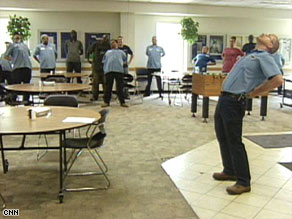
Lincoln Industries looks like a typical blue-collar plant: workers cutting, bending, plating and polishing steel for products such as motorcycle tailpipes and truck exhausts amid the din of machinery.

But the 565-employee Nebraska company is different.

Lincoln Industries has three full-time employees devoted to "wellness" and offers on-site massages and pre-shift stretching.

Most unusual of all: The company requires all employees to undergo quarterly checkups measuring weight, body fat and flexibility. It also conducts annual blood, vision and hearing tests. READ MORE

Jeff speaking about childhood vaccinations on Fox News:

http://www.fox5sandiego.com/videobeta/?watchId=a4526131-fef3-45fd-812d-fe2066bce64a